Everyone talks about the spring market. But here in Lakeshore East, the data tells a different story: fall is one of the most underrated times to buy or sell.
The Sweet Spot is Now
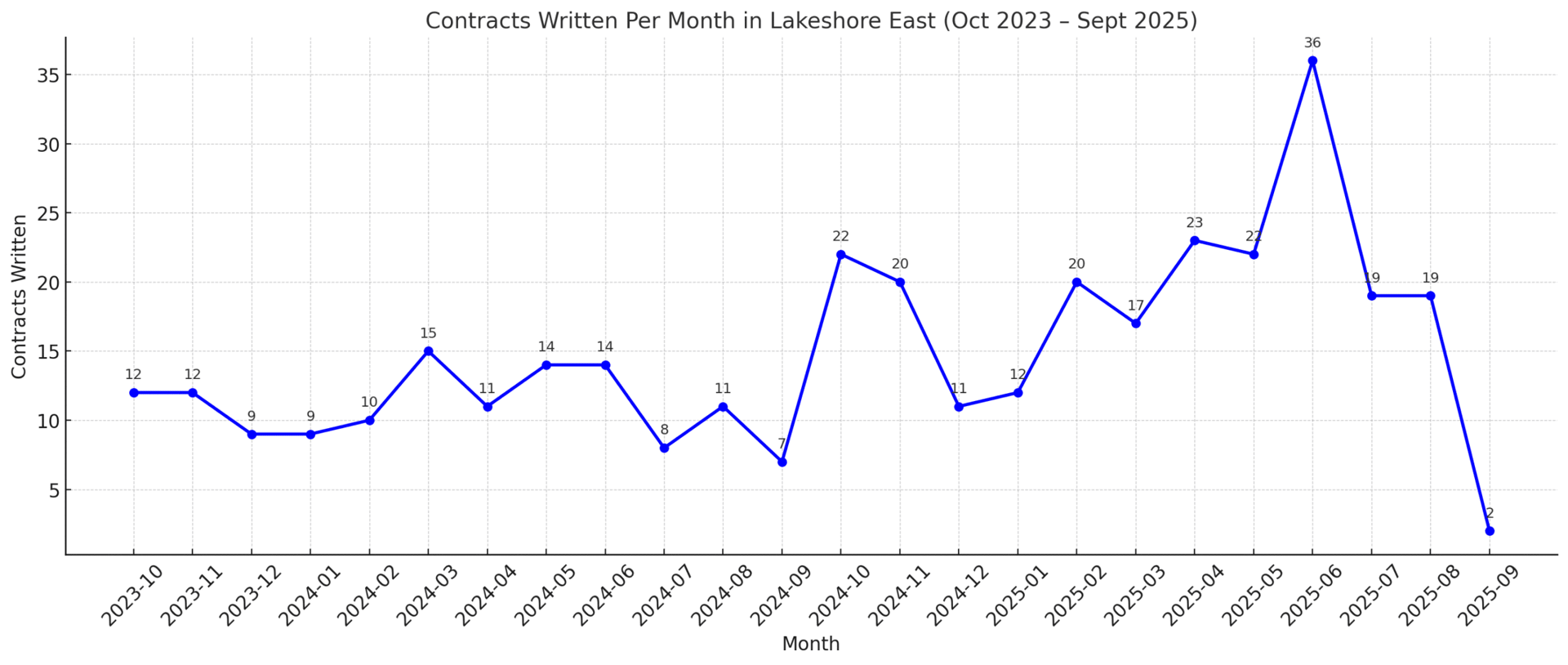
Contracts in Lakeshore East nearly tripled last October—jumping from just 7 to 22. Buyers don’t disappear after summer; in fact, fall often brings less competition and more negotiating power than spring.
The chart below shows how fall creates a sweet spot before the winter slowdown.
Data reflects contracts through September 4, 2025
Contracts Written Per Month: Fall 2024 saw one of the sharpest jumps in activity, showing that October remains a powerful month for motivated buyers and sellers in Lakeshore East.
Seller Tip:
Fall buyers are motivated and want to be in their new home before year-end. That means fewer showings that go nowhere and a higher chance of serious offers.
Buyer Tip:
Inventory is steady, and sellers are more open to negotiating—giving you extra leverage heading into year-end.
Why Fall Buyers Are More Serious
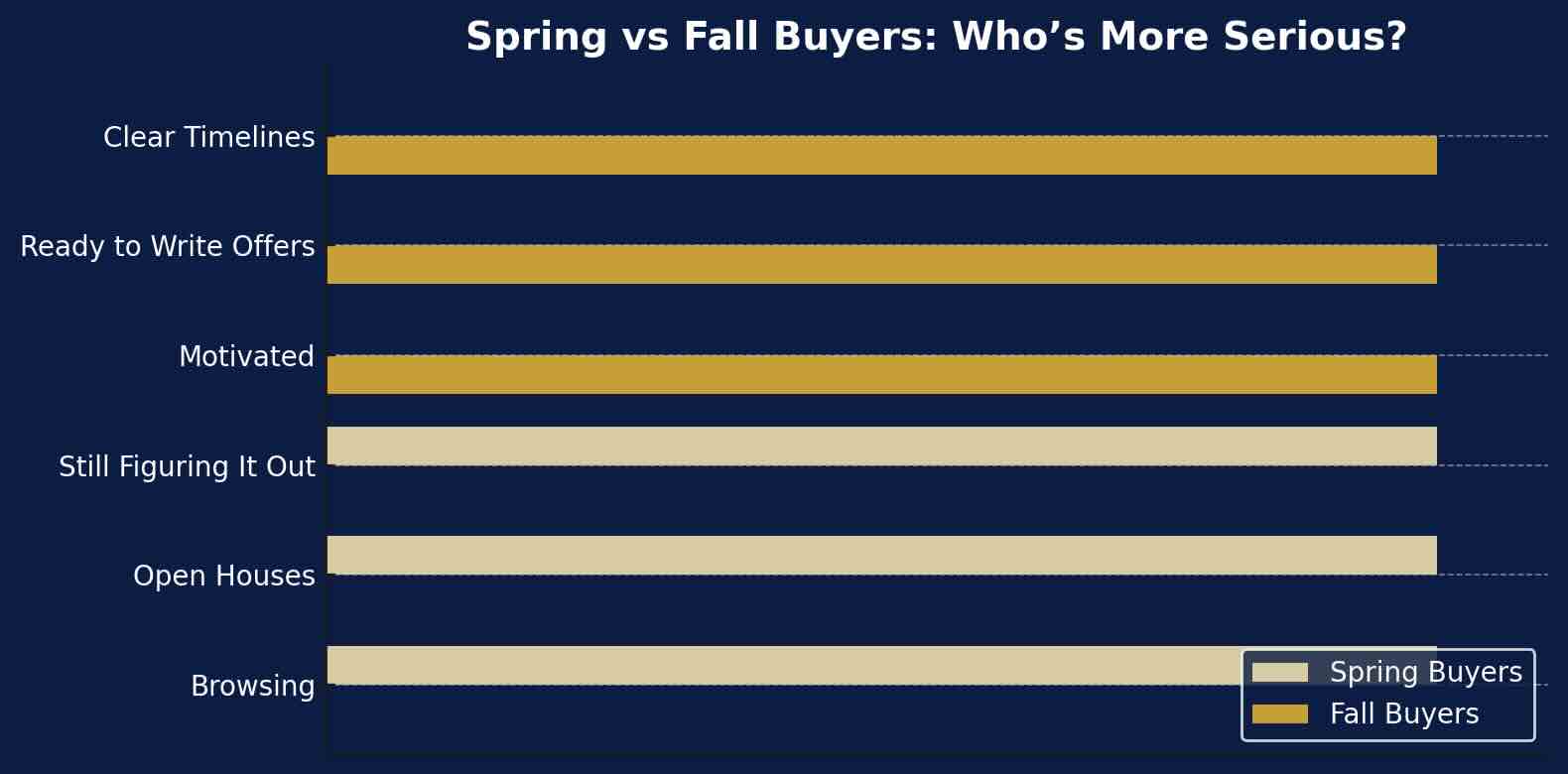
The buyers who shop in September and October aren’t browsing—they’re serious about finding a home before year’s end.
Spring attracts browsers. Open houses are filled with curious neighbors, first-timers “just looking,” and buyers who are still figuring out their wish list. By fall, the picture changes. The buyers who are still active now tend to be the most motivated—they want to be settled before the holidays, the new year, or even the next school semester.
That urgency means fall buyers are less likely to waste time. They’re ready to write offers, negotiate quickly, and close with a clear timeline. For sellers, that translates into fewer showings that go nowhere and a higher chance of serious offers landing on the table.
What this tells us:
-
Fall buyers may be fewer, but they’re highly motivated.
-
Well-priced, well-presented homes still attract quick offers.
-
Overpriced or unprepared listings tend to sit longer, especially heading into winter.
The Slowdown is Real—But Predictable
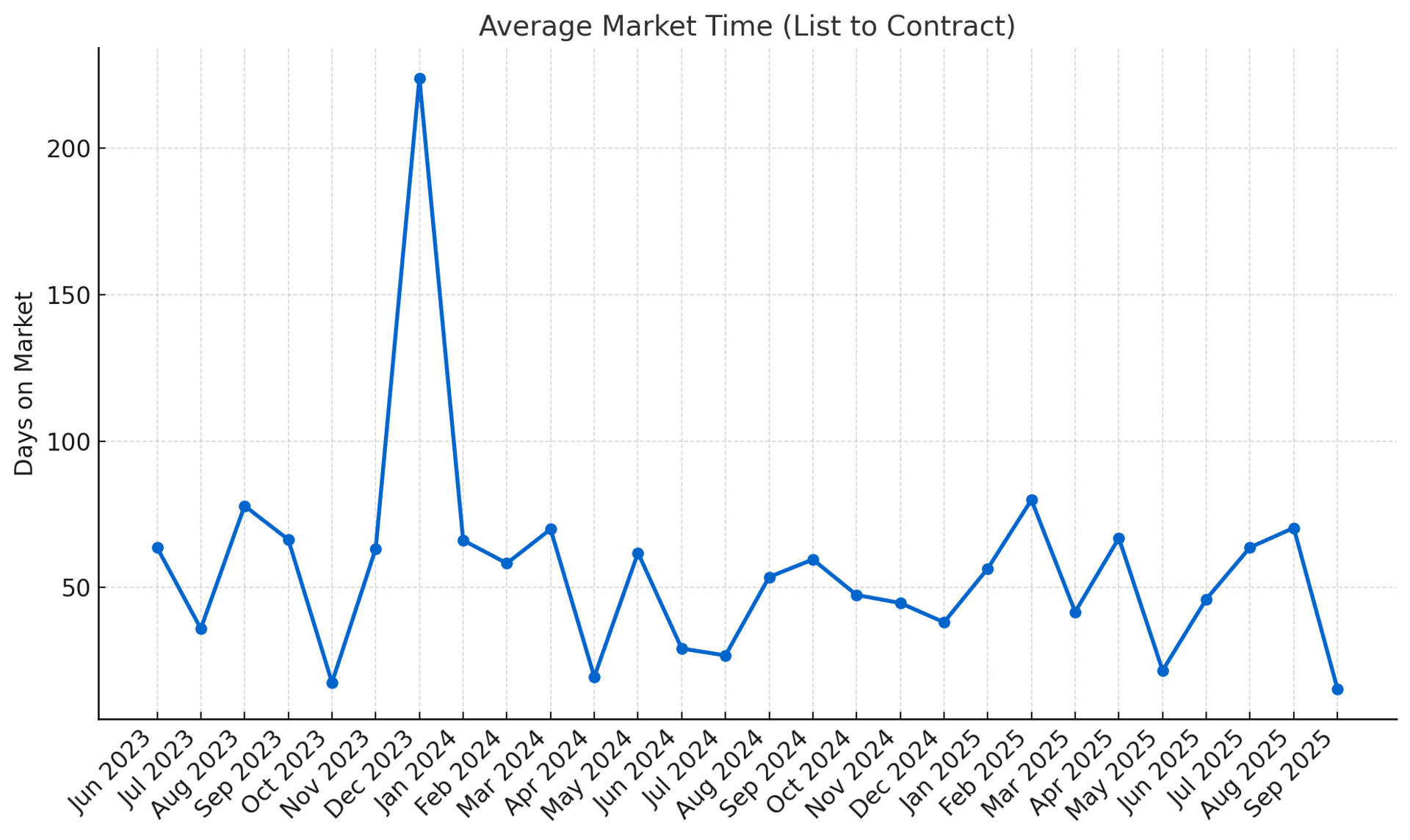
The data also shows what happens when you wait. From November through February, contract activity dips and average market time stretches. It’s not that buyers vanish—it’s just seasonality. The pattern is consistent year after year: fewer transactions, slower movement, and more listings sitting longer than they would in early fall.
Here’s Where the Shift Shows Up Most Clearly.
Back in October 2024, listings were moving at a healthy pace, with motivated buyers stepping in and contracts spiking. But as the calendar rolled into late fall and winter, the pace shifted. By December and January, average market time stretched noticeably, and homes that weren’t priced or presented well began to linger.
Why?
-
Buyer urgency fades after October. Without the pressure of settling before the holidays or new year, timelines get longer.
-
Higher interest rates and seasonal distractions mean buyers negotiate harder and wait for the right fit.
-
Overpriced or underprepared listings lose momentum quickly in the quieter months.
Even so, the story isn’t all bad news. Homes that are priced right and staged to shine still attract attention and offers—just at a slower pace than in the early fall window.
The slowdown is seasonal—and predictable.
Sellers who want to avoid longer market times should list in September or October, when demand is steady and buyers are most motivated.
Listings that hit the market without prep? They sit.
Prices that miss buyer expectations? They get ignored.
Homes that are priced right and staged well? They still move—just more slowly once winter sets in.
Why Timing Matters in the New Eastside
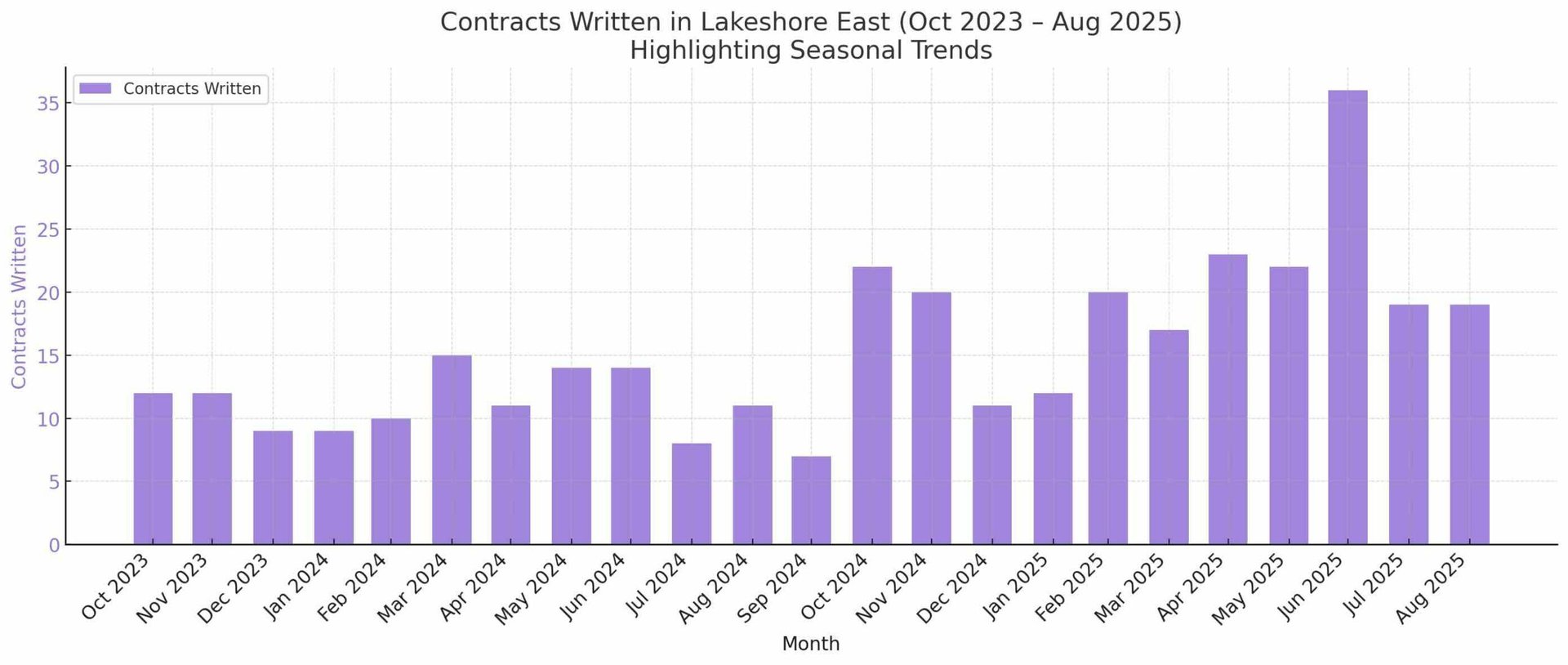
Seasonal patterns are clear in Lakeshore East—fall delivers momentum, winter slows it down, and spring brings a rebound.
Why It Matters in the New Eastside
-
Timing is everything. Listing in September or October captures motivated buyers who want to move before the holidays or new year.
-
Wait too long, and momentum fades. By late fall and winter, contracts slow noticeably as fewer buyers are active and many sellers wait until spring to relist.
-
Fall is the sweet spot. Sellers benefit from steady demand, while buyers enjoy less competition than spring—yet still enough activity to keep the market moving.
What This Means for Sellers
If you’ve been thinking about selling, fall is the sweet spot. Motivated buyers are out there now, and the seasonal slowdown hasn’t set in yet. And if you’re buying? This is the perfect window—less competition than spring, but still enough activity to keep the market moving.
What the Chart Shows Us
Fall (Sep–Oct)
Winter (Nov–Feb)
Spring & Summer (Mar–Aug)
Planning to sell in 2026?
Turning Market Trends into Strategy
My Approach: Turning Market Trends into Strategy
Selling in the New Eastside isn’t about pushing a listing out the door—it’s about timing, strategy, and knowing how to position your property in a market that shifts season by season. As I’ve shared in
What It’s Like to Sell in Today’s Market, success comes from preparation, not chance. My approach is rooted in honesty and data: giving you a clear read on what it takes to sell, and applying the principles from
A Good Agent Talks. A Great One Listens. to make sure every detail—from staging to pricing to negotiation—works in your favor.
When you're ready to sell, it’s not about throwing your condo on the market and hoping it sticks. It’s about knowing what buyers want, how the data is trending, and how to put your home in its best light — visually and financially.