
The New Eastside numbers show where the real competition comes from, and it isn't spring.
If your condo is on the market heading into the holidays, you're probably asking whether to keep it listed. Showings slow down. You have plans. Spring sounds easier.
I've already had this conversation with every one of my sellers. One is taking their home off the market. The rest are staying on. Each decision came down to that seller's situation, not the calendar.
Before you decide, look at what happens in the New Eastside once the holidays end.
The competition doesn't wait for spring
Most sellers who pause for the holidays plan to come back after the new year. So does everyone else.
I pulled two years of MLS data for the New Eastside. New listings drop in November and December, then jump the moment January starts.
| Months | New listings per month | Closings per month |
|---|---|---|
| November & December | 15 | 13 |
| January & February | 28 | 8 |
| March & April | 39 | 14 |
January and February bring nearly twice as many new listings as the holidays, along with the fewest closings of the year. Take your condo off in November, relist in January, and you're walking into the most crowded stretch on the calendar.
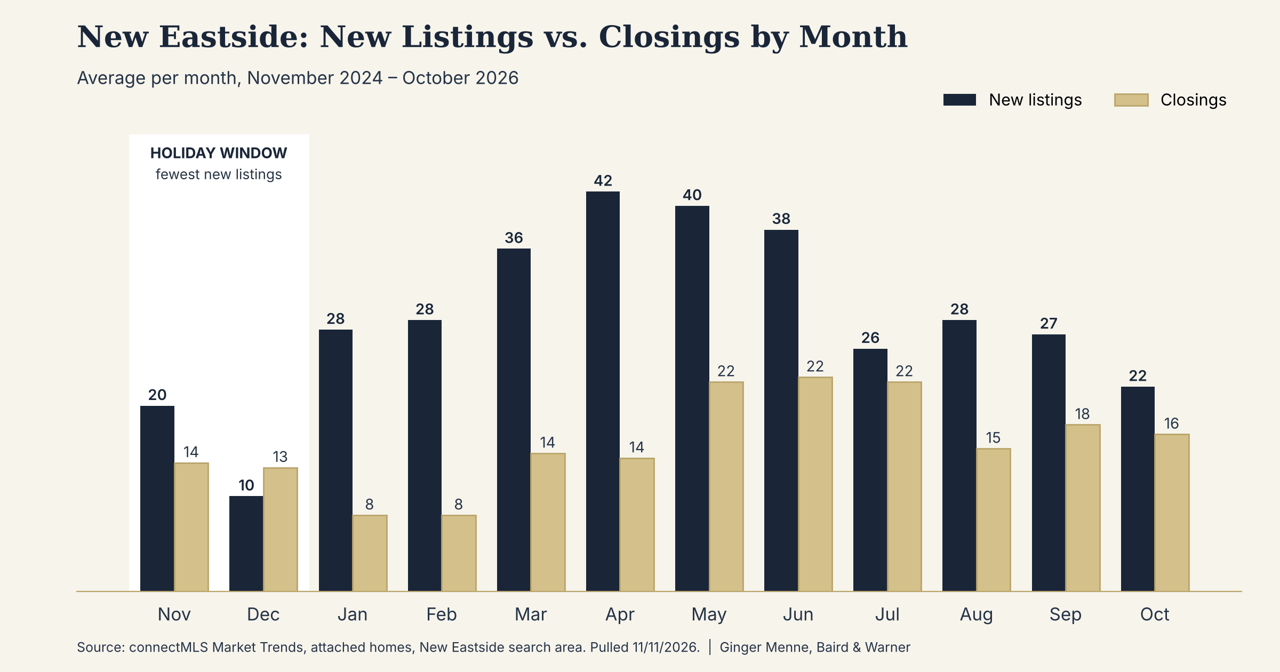
More buyers for every new listing
Closings trail contracts by a month or two, so I compared each month's new listings with closings one month later.
For every 10 new listings in November and December, about 7 homes closed the following month. In January and February, that dropped to 4. In March and April, about 5.
The pattern held both years. The holidays are the only stretch where new supply actually falls, and the buyers still looking have fewer new options to choose from.
Fewer showings, more serious buyers
Yes, you'll have fewer showings. Holiday travel, Chicago weather, and 4:30 sunsets take care of that.
The buyers still out there have a reason to be. A new job, an expiring lease, a change at home. They aren't browsing. They need to move, and they're choosing from a short list.
For a condo, that list is very specific. Another unit in your tier, a similar layout with a better view, a home with parking included. Ask your agent what buyers can choose instead of yours right now. If the answer is "not much," that's a reason to stay on.
When staying listed makes sense
If your home is ready, priced right, and available to show, keep it on.
That goes double if you've already moved out. You're paying assessments, taxes, insurance, and utilities every month you wait. A spring sale has to beat what it costs to carry the property until then.
Staying listed doesn't mean giving up your holidays. Block the dates you need with your agent and schedule showings around them. You can host Christmas and still sell your home.
When taking a break makes sense
Sometimes you need the break. If you're hosting family, traveling, or worn out from keeping everything show-ready, that matters.
A pause also buys time to paint, make repairs, or improve the presentation before you come back.
What I don't want is for a seller to come off the market, change nothing, and expect January to fix it. Buyers and their agents see your listing history when you return. If the feedback has been about price or condition, address it before you relist.
If your home is already listed, talk with your own Realtor about the feedback, your current competition, and your timeline. If you decide to pause, agree on a return date and what has to happen before then.
Planning to sell before the holidays or in spring 2027?
If your New Eastside or Lakeshore East condo isn't listed yet, now is the time to plan.
Ready now? The holiday window is open, and it closes when January starts. Want to wait? Use the next few months to get organized, make the improvements that matter, and know exactly how your home compares with others in your building.
Either way, reach out. I'll help you build a plan for timing, preparation, and pricing before you list.
Source: connectMLS Market Trends, pulled November 11, 2026, for attached homes in the New Eastside search area. Monthly averages use November 2024 through October 2026 (two of each month) and are rounded. The listings-to-closings comparison pairs each month's new listings with closings the following month.
